
Automobile Tips
Quick question. Which part of your car works like a roof beam, an airbag backstop, and a safety belt at the same time? The answer is sitting right in front of you.
Try this experiment in your head. Take the windshield out of a car, flip that car onto its roof, and watch what happens to the people inside. The result is ugly, and almost none of it has to do with visibility. For something we stare through every single day, the windshield gets almost no credit for the job it actually does. Most of us file it next to the kitchen window, a clear panel that keeps wind and bugs off our faces. That assumption is not just wrong. It is the kind of wrong that matters at sixty miles per hour.
The glass in front of you is a structural part of the vehicle. It is engineered into the body and bonded in place for reasons that go far past comfort. It carries crash loads, it stiffens the cabin, it helps prop up the roof, and it gives the passenger airbag something to push against. Once you see what that sheet of laminated glass is really doing, a chip, a crack, or a bargain replacement starts to look a lot more serious than a cosmetic nuisance.
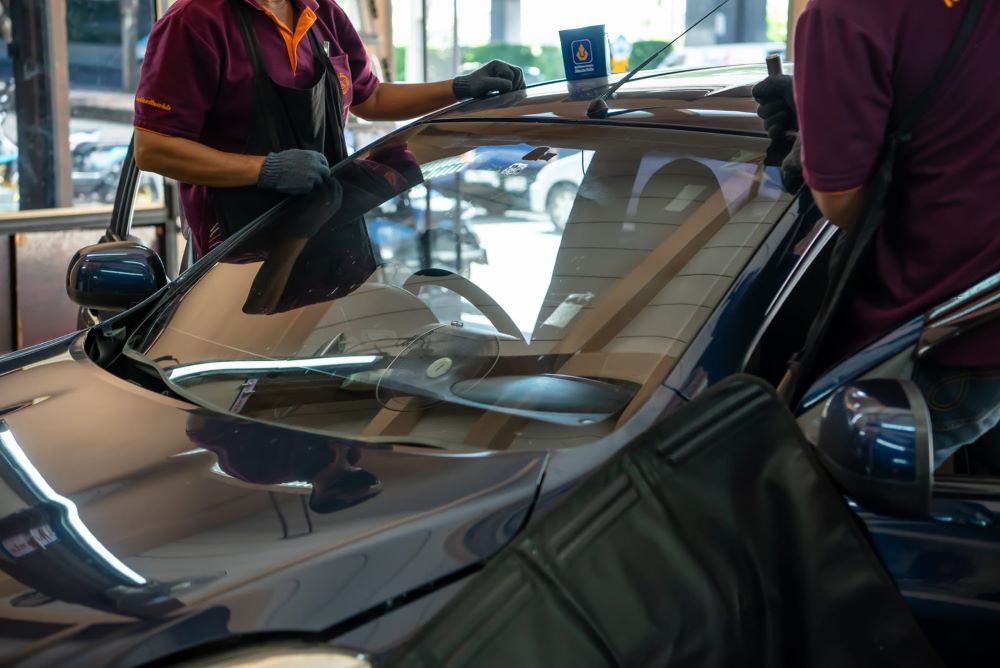
Roll down a side window and it vanishes into the door. That is a window. Your windshield does the opposite. It is bonded to the frame of the car with a thick bead of automotive urethane, a structural adhesive that ties the glass and the body into one connected unit. That bond is not there for looks, and it does far more than seal out rain. It lets the glass carry weight.
When engineers lay out a modern vehicle, the windshield is part of the structural math. It adds rigidity to the front of the cabin, the same way a fixed pane stiffens a picture frame. Take it out, or bond it badly, and the structure around it gets measurably weaker. That is why a careful shop treats the glass with the same respect as a suspension part, even though it looks like the most passive piece on the whole car.
On an ordinary commute, the glass just sits there and looks pretty. In a crash, it earns its keep in about a tenth of a second. Here is what safety engineers are quietly counting on it to do.
Not all auto glass is built the same way, and the difference is deliberate. Your windshield is laminated. The side and rear windows are usually tempered. Those are two different materials picked for two very different jobs.
Laminated glass is basically a sandwich. Two thin layers of glass are bonded around a clear plastic core, a film called polyvinyl butyral, or PVB. When the windshield takes a hit, the glass can crack, but the plastic layer holds the pieces in place. That is why a damaged windshield looks like a spiderweb instead of a pile of shards in your lap. It stays put, it stays in one piece, and it keeps doing its structural job even while it is hurt.
Tempered glass plays the opposite game. It is heat treated so that when it breaks, it bursts into thousands of small, blunt pebbles instead of long, sharp blades. That is exactly what you want in a side window you might need to smash to climb out, but it would be a disaster in a windshield.
Because the windshield is structural, how it goes back in matters as much as the glass itself. A replacement is not just dropping a fresh pane into a hole. The old adhesive has to be cut down and re-laid the right way, the surfaces have to be clean and primed, and the new urethane needs time to cure before the car is safe to drive. That window is called safe drive away time, and rushing it quietly undoes the entire point of the bond.
Good shops treat this as a safety procedure, not a quick swap. Marcus Bell, a glass technician with more than a decade in collision work, says it plainly. "People shop for the cheapest windshield they can find, but they are really buying the install, not the glass. A perfect pane set in rushed adhesive is a liability, not a bargain." Walkthroughs from installers like On Track Auto Glass lay out what a correct installation actually involves, which is worth reading before you hand your keys to anyone.
Newer cars add one more wrinkle. Many windshields now carry the camera that runs lane keeping, automatic emergency braking, and other driver assistance features. Move that glass and the camera usually has to be recalibrated, or those systems can misjudge the road. If your vehicle has them, pick an installer who handles calibration in house, like the top rated auto glass calibration companies that specialize in aiming the sensors correctly after a swap.
It depends on your state and on where the damage sits, but a crack in the driver's line of sight can fail a safety inspection and draw a ticket in many places. Beyond the legal side, a crack chips away at the structural job the glass is built to do, so it is worth handling early.
Yes, and it happens all the time. Temperature swings, rough roads, and the normal flex of the body all load stress onto a chip. A tiny star can run into a long crack overnight, which is why a quick repair is usually cheaper and safer than waiting.
Often it does, especially with comprehensive coverage, and a few states even waive the deductible for glass. Check your specific policy, because coverage and any reimbursement for sensor recalibration can vary quite a bit.
Good aftermarket glass can meet the same safety standards, but not every piece does, and fit matters for any sensors mounted to it. Ask whether the replacement meets the original specification before you agree to it.
It is easy to look at a windshield and see nothing but a clear sheet that keeps the wind off your face. The truth is far more impressive. That laminated panel is bonded into the body to stiffen the cabin, it gives the passenger airbag a surface to work against, it helps the roof stay up in a rollover, and it keeps people inside the car when everything else is flying apart. None of that shows up on the spec sheets most buyers ever read, which is exactly why it pays to know.
So the next time a rock leaves a star shaped chip, or a crack starts crawling across your view, skip the urge to ignore it or to chase the lowest bid. You are not babysitting a window. You are maintaining a piece of your car's safety structure, and the quality of both the glass and the install is the line between a part that protects you and one that only looks the part. Treat it that way, and the most overlooked component on your car keeps doing its quiet, life saving work for years.