Six things heat goes after before anything else, why the damage surfaces months after the hot spell, and the ten minute habit that prevents almost all of it.

Ask a hundred drivers which season is hardest on a vehicle and ninety nine of them will name winter. The tow bills say otherwise.
Roadside crews get busiest when the thermometer parks above ninety degrees for several days in a row, and the calls repeat themselves: a battery that gave no warning at all, a tire that let go in the right lane, a temperature needle climbing while traffic crawls. AAA has said flatly that dead batteries are the number one problem its technicians respond to in hot weather, which lands strangely on anyone who has ever stood in a driveway on a frozen morning listening to an engine refuse to turn over.
Winter damage announces itself. The car will not start, the wipers freeze to the glass, the pressure warning light glows on the first cold morning of the year. You know something is wrong within seconds, and you deal with it that week.
Heat works the other way around. It degrades materials slowly and invisibly, then presents the bill on a day you had other plans. Rubber hardens. Fluids thin and evaporate. Plastic clips grow brittle. Battery electrolyte cooks off through vents you will never look at. Nothing about the car feels different while any of that is happening, so nothing gets checked, and the failure arrives with no build up at all. That gap between when the damage happens and when anyone notices is the entire reason summer wins this contest.
The battery that quits on the first freezing morning usually lost its real capacity the previous August. High temperatures accelerate fluid loss inside the case and speed up oxidation of the internal components, which permanently reduces how much charge the battery can hold. Cold weather then exposes what summer already took, because a weakened battery has to work far harder to turn over a cold engine.
Most batteries carry a three to five year service life under ordinary conditions. In a climate that spends months in the high nineties, the honest expectation sits at the low end of that range and sometimes below it. The practical move is a load test once the battery passes its third birthday rather than waiting for a symptom, because there very often is not one. A battery that starts the car perfectly on Tuesday can be completely flat on Wednesday morning.
Not everything under the hood suffers equally. Heat concentrates its damage on components that depend on flexible rubber, on liquids that were never meant to approach a boil, and on materials already under constant mechanical stress. Knowing which parts sit in that group turns a vague worry about summer into a short, manageable list.
A tire is a pressure vessel made of rubber, and both halves of that description react to temperature. Air expands as it warms, so pressure climbs roughly one psi for every ten degree rise in ambient temperature, and pavement surface temperatures run far above the air temperature on a sunny afternoon. Underinflated tires flex more than they should, flexing creates heat, and heat is what turns a small internal weakness into a blowout at highway speed.
For the longer version of that inspection, what your tires are telling you walks through wear patterns, date codes and the tire choice most drivers get backwards.
A cooling system is built with a small safety buffer, and extreme heat spends it. Coolant that is two or three years past its service interval loses the corrosion inhibitors blended into it, which quietly eats radiator internals and water pump seals from the inside. A radiator cap with a tired spring lowers system pressure, which lowers the boiling point, which is precisely the wrong direction on hot asphalt in stop and go traffic. Hoses that felt fine in spring can turn spongy or rock hard by the end of a long summer.
The tell is usually a temperature gauge that behaves differently in traffic than it does at speed. A car that runs normal at sixty and creeps upward at a red light is pointing at the airflow side of the system, often a failing cooling fan or a radiator packed with road debris and bugs.
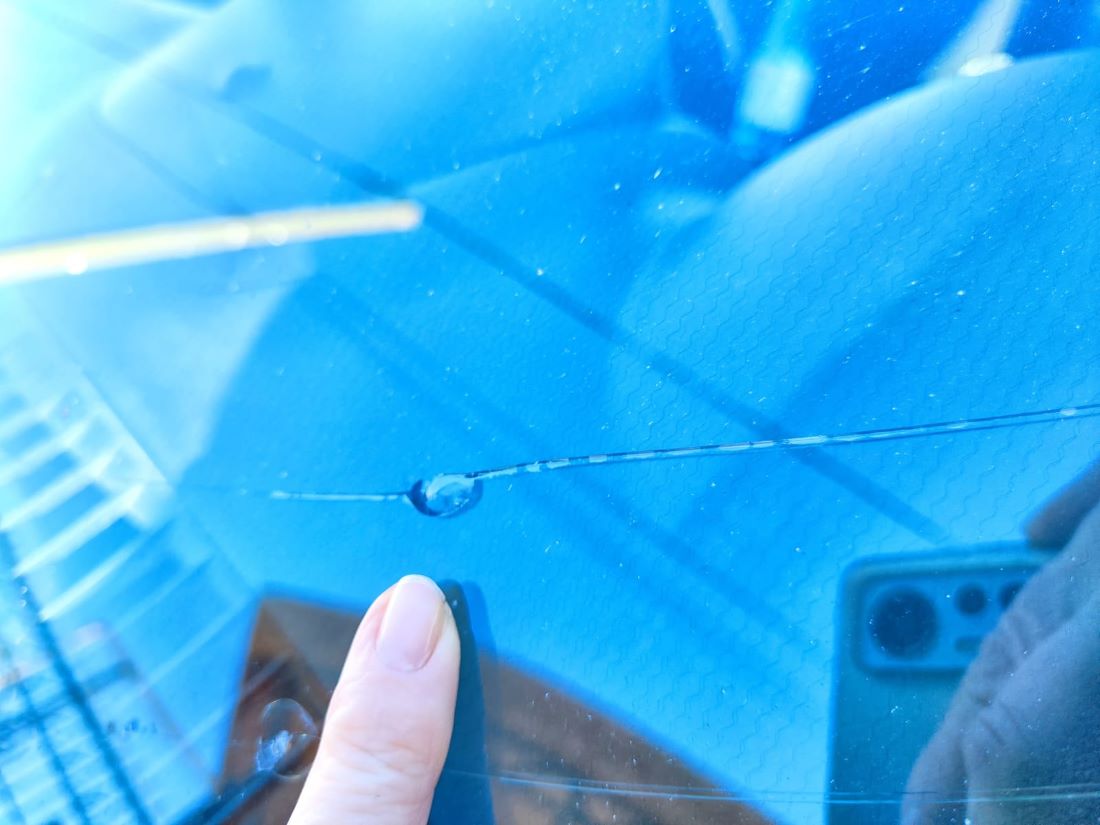
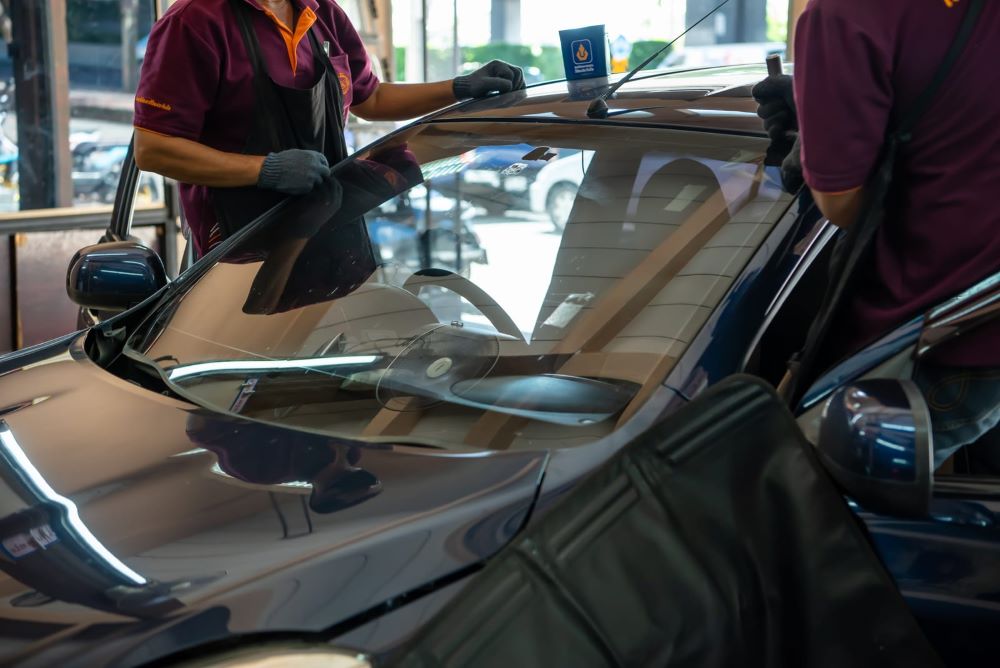
A chip that sat harmlessly in a windshield for months tends to run the moment the temperature difference across the glass gets large enough. Aiming cold air conditioning at a windshield that has been baking in a parking lot creates exactly that condition, and a two inch crack becomes a full replacement. Worth remembering here is how much structural work a windshield does in a modern vehicle, since the glass is bonded into the safety cage rather than simply set into a frame.
If the vehicle carries a camera mounted behind the mirror, replacement is not the end of the job either. The driver assistance system has to be recalibrated to the new glass, and our windshield calibration guide covers what that involves and why skipping it is a genuine safety problem rather than a paperwork one.
Almost everything above is preventable with one short, boring habit performed while the engine is cold, roughly once a month through the hot season. None of it needs tools beyond a tire gauge and a flashlight, and none of it requires knowing anything about how an engine works.
Six items, ten minutes, and the overwhelming majority of hot weather breakdowns simply never happen.
Cabin temperatures climb fast enough that federal safety campaigns built their child heatstroke warnings around the speed of it, with an interior gaining close to twenty degrees in the first ten minutes alone. That heat does more than make the seats unbearable. It bakes dashboards until they crack, degrades the adhesive holding trim in place, cooks electronics that were never designed to sit at those temperatures, and stresses the seal around the windshield.
Shade is the cheapest maintenance available anywhere. A reflective sunshade, a parking spot on the north side of a building, a garage instead of an open driveway: each one buys years of life for interior materials that are expensive and irritating to replace. Cracking the windows an inch, where it is safe to do that, lowers peak cabin temperature by a meaningful margin.
Two habits cause more heat related damage than any mechanical fault does. The first is topping off coolant with plain water because the reservoir was low and a water bottle was handy, which dilutes the mixture and raises the risk of both boiling and corrosion at once. The second is treating air conditioning that blows slightly warm as a comfort complaint rather than a symptom, when weak cooling usually means low refrigerant from a leak that will get worse and eventually take the compressor with it.
Heat does not break cars the way potholes and collisions do. It ages them, steadily and silently, then hands the invoice to whoever happens to be driving on the day something finally lets go. Batteries lose capacity months before they lose the ability to start an engine. Tires collect internal damage long before a sidewall gives up. Coolant loses its protective additives while the gauge still reads dead center. Every one of those failures is quiet right up until the moment it is not.
The counter to a slow problem is a slow habit. Ten minutes with a tire gauge and a flashlight once a month, a battery test after year three, coolant replaced on schedule instead of on discovery, chips repaired while they are still chips, and a parking spot chosen with a little thought. Do that and the hottest stretch of the year quietly becomes the least eventful one, which is the only kind of car ownership anybody actually wants.