A field guide to the only parts of a car that touch the road: what wear patterns confess, how old is too old, and the tire choice most buyers get backwards.
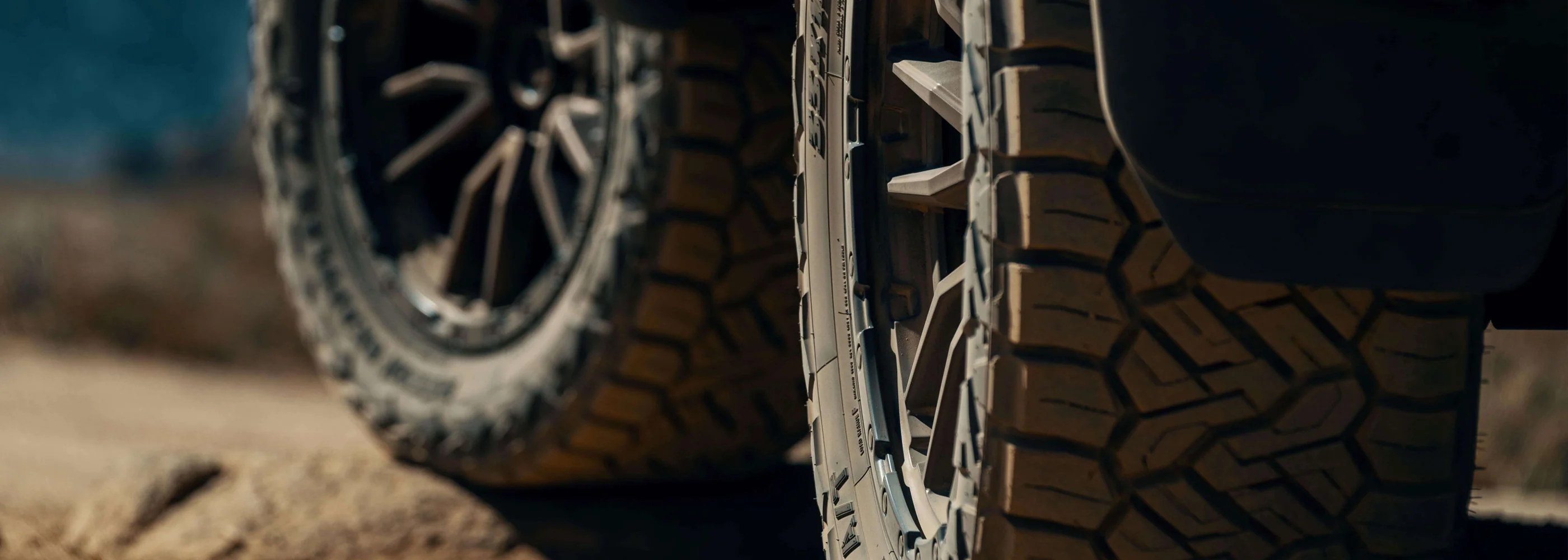
Every stop you have ever made, every corner you have taken and every panic swerve that worked out fine happened on four patches of rubber roughly the size of your palm.
That is the entire contact area between a two ton machine and the road, and tires are the one system on a vehicle that wears out in full view while almost nobody looks. Drivers who track oil changes to the mile will buy tires on price alone, then wonder why the car feels vague and nervous in the rain. The information they needed was printed on the sidewall and stamped into the tread the whole time, written in a language that takes about five minutes to learn.
Brakes only ask the tires to stop the car. Everything the chassis, the traction control and the antilock system are trying to accomplish gets translated through those four contact patches, and none of it can exceed the grip available there. A vehicle with excellent brakes and tired tires stops badly. A modest car on fresh, correctly inflated tires stops surprisingly well.
That relationship is why tires deserve far more attention than they get, and why the two cheapest habits in car ownership, checking pressure and actually looking at wear, return more safety per minute spent than anything else a driver can do in a driveway.
A tire records how a car has been driven and how well it has been maintained. Run a hand across the tread, front to back and edge to edge, and the pattern under your palm names the problem with unusual precision.
None of these repair themselves, and all of them shorten tire life while quietly reducing wet weather grip. A pattern caught early usually costs an alignment. The same pattern caught late costs an alignment and a set of tires.
Tread depth is only half the story. Rubber is a chemical compound that degrades on its own through heat, ultraviolet light and oxidation, which means a tire can be dangerously old while still looking nearly new. Low mileage vehicles, weekend cars, campers and spare tires are where this catches people out, because the tread never wore down enough to trigger a replacement conversation.
Every tire sold in the United States carries a DOT code molded into the sidewall, and the last four digits are a manufacturing date. The first two are the week of the year, the last two are the year. A code ending in 5121 means the tire was built in week 51 of 2021, so the final days of December. The complete code is often stamped on only one side of the tire, so if the numbers look short, check the inboard sidewall as well.
There is no single legal expiry date, but the industry consensus is consistent enough to act on. Under five years, a tire in good condition is generally fine. Between five and ten years it deserves a proper inspection every year, with replacement worth planning for. Past ten years, replace it regardless of how much tread is left. Most manufacturers and safety organizations land somewhere in the six to ten year window, and the reason is internal rather than visual: the bond between the rubber and the steel belts underneath weakens with age in ways no amount of remaining tread can compensate for.
The legal minimum across most of the country is 2/32 of an inch, roughly 1.6 millimeters. That number is a floor, not a target. Many technicians recommend replacing at 4/32 instead, because wet braking distances and resistance to hydroplaning fall off sharply well before a tire is legally bald. AAA suggests a quarter as the measuring tool: slide it into the groove with Washington head down, and if the top of his head is visible, the tire is finished. The older penny test marks the legal limit, which by that point is already too late for confident driving in rain.
Check the spare while you are down there. A full size spare ages on exactly the same clock as the tires doing the work, and a temporary spare carries both an age limit and a speed limit printed on it that almost nobody reads until they are standing on the shoulder.


Tire shopping goes wrong in a predictable way. A driver buys for the trip they imagine taking rather than the commute they take four hundred times a year, then lives with that compromise on every one of those trips. The useful question is not which tire is best. It is which tire is best at the thing you do most.
Aggressive all terrain tires look superb and genuinely transform a truck on dirt, gravel and sand. They also carry real costs on pavement: more road noise at highway speed, longer wet stopping distances than a good highway tire, measurably worse fuel economy from the added weight and rolling resistance, and faster wear if the vehicle spends most of its life on asphalt. For a truck that actually leaves the pavement most weekends, that trade is an easy yes. For one that sees a gravel road twice a year, it is an expensive costume.
The calculation shifts again with heavier and torquier vehicles, which is part of why tire choice comes up so often in conversations about electric off roading, where instant torque and significant battery weight both push harder on the contact patch than most drivers expect.
The sticker inside the driver door lists the original tire size, the recommended pressures and, on most vehicles, the load index and speed rating the manufacturer engineered around. Those last two matter more than they sound. Load index describes how much weight a tire can carry, and dropping below the original figure on a loaded truck or a three row SUV is a genuine safety problem. Speed rating relates to heat tolerance at sustained speed rather than to top speed bragging rights.
Sizing up for looks changes speedometer accuracy, effective gearing, clearance and sometimes the calibration of driver assistance systems. If a different size is genuinely wanted, it belongs in a conversation with a technician rather than in a checkout cart at midnight.
Tires reward routine more than they reward money. A modest tire maintained well often outlasts an expensive tire that gets ignored.
Heat runs through every one of those points, which is also the thread in what a hot summer quietly does to a vehicle, since underinflation and high temperature together do more tire damage than either one manages alone.
Tires are the least glamorous purchase in car ownership and the one with the most direct line to whether a bad moment stays merely a moment. They tell you when alignment has drifted, when a shock has given up, when pressure has been neglected for a season, and when the rubber itself has aged past the point of being trustworthy. All of that is legible to anyone willing to crouch down for two minutes with a coin and a flashlight.
Learn the date code, run a hand across the tread every month or two, set the pressures to the door jamb rather than the sidewall, and buy for the driving that fills your calendar instead of the driving that fills your daydreams. Four palm sized patches decide how a car stops, steers and behaves when the road turns wet. Treating them as the most important parts on the vehicle is not caution. It is accuracy.