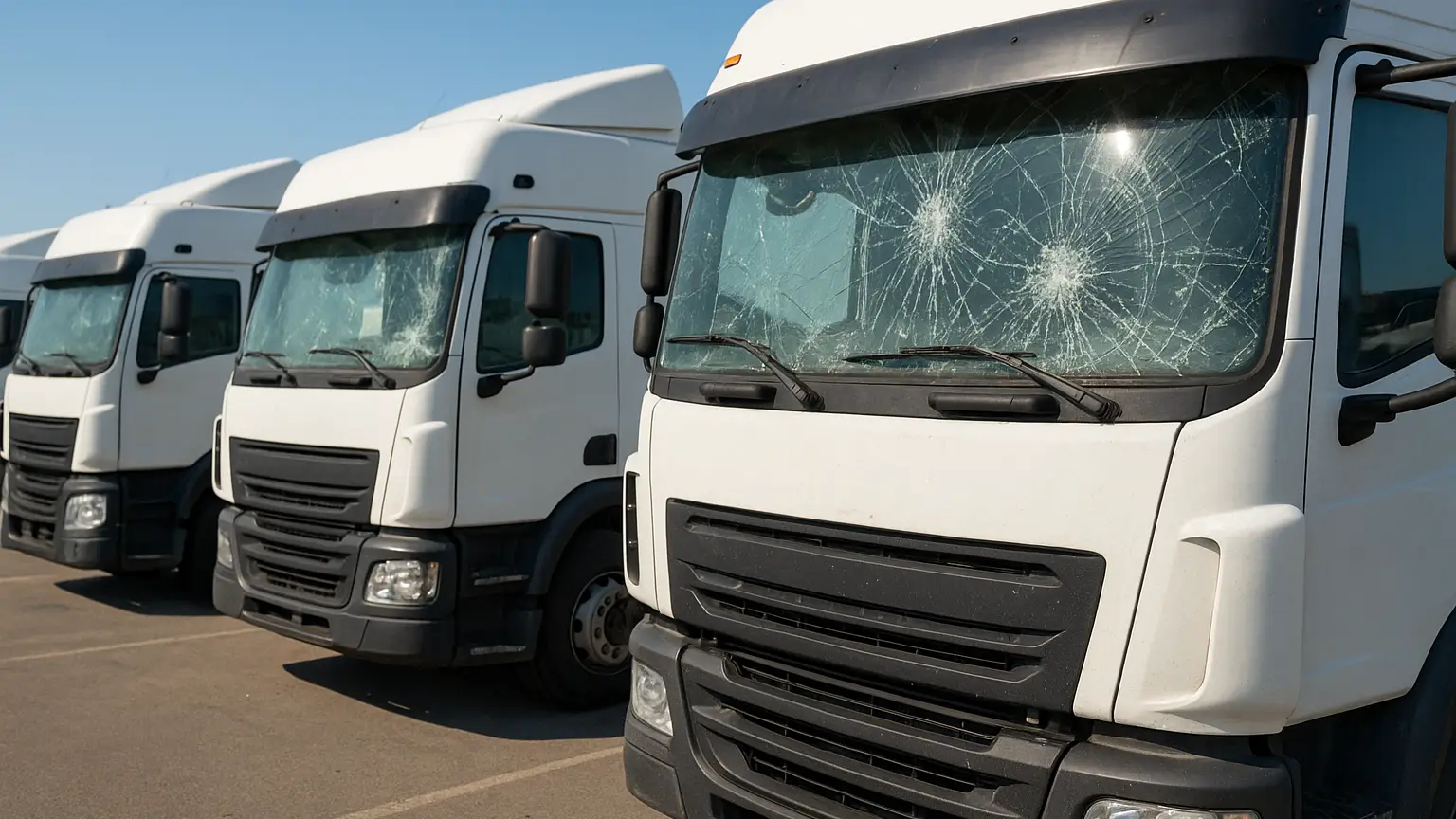
The handful of signals a driver scans in the seconds after a rock hits the glass, and what most shop listings quietly get wrong.
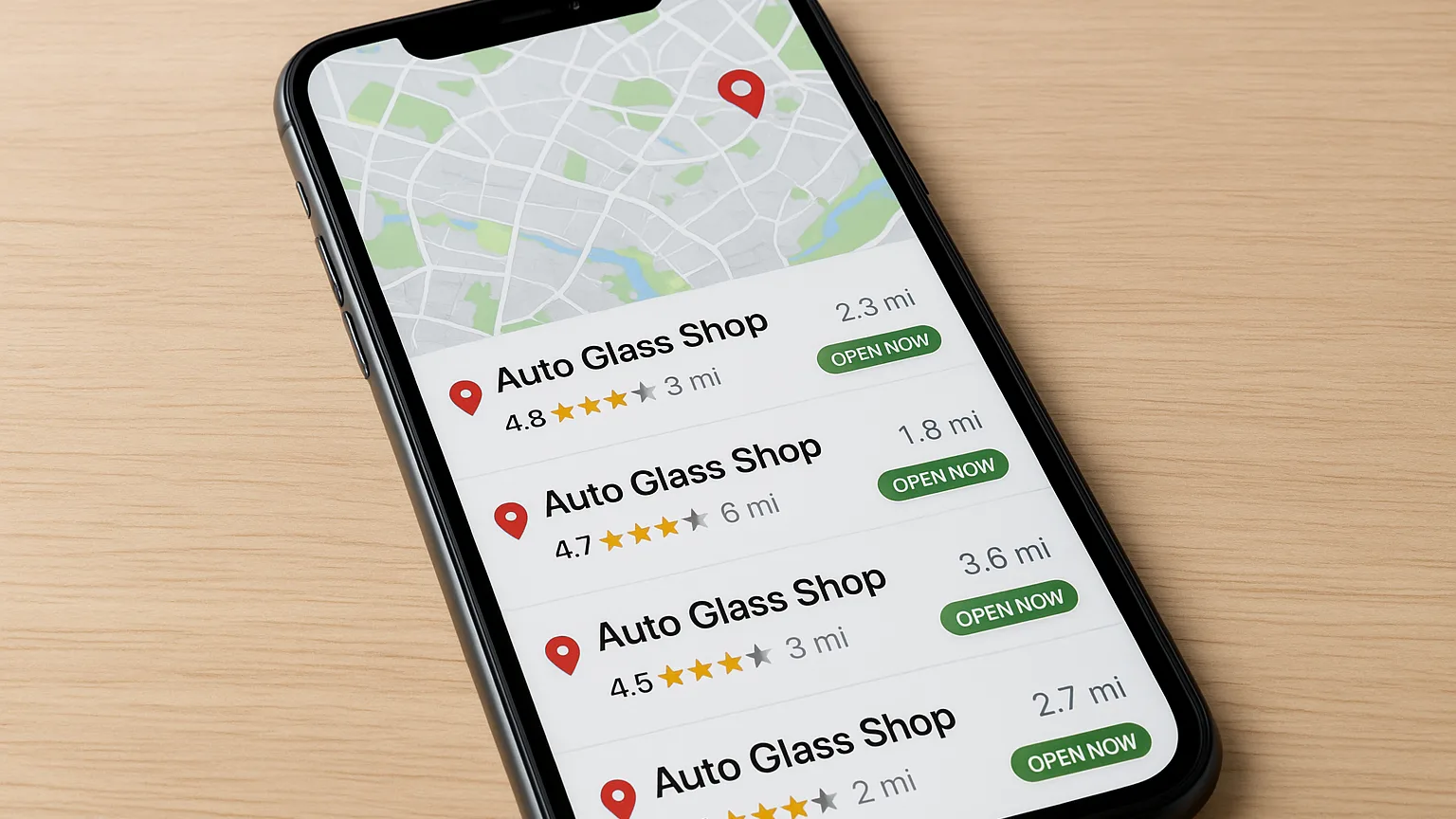
Part one looked at how leading with your lowest price turns your shop into a swappable line item. But even a well-positioned shop loses work it never knew existed, because the driver with a fresh star crack never reached your phone number in the first place.
This series was shaped in part by insights from Soderman SEO, whose work with glass shops keeps surfacing the same pattern: the shop that wins the emergency call is rarely the best technician in town. It is the one that answered a driver's silent questions fastest.
Picture a driver in a parking lot. A rock hit the glass twenty minutes ago and the chip is spreading toward her sightline. She types "windshield chip repair near me" and scans the map. She is not comparing craftsmanship, because she cannot. In about five seconds, she is comparing a short list of signals:
That is the whole evaluation. She taps one, maybe two, and the second shop only gets a shot if the first does not pick up. Shops obsess over resin quality and ADAS calibration, then lose the job to a listing with better photos. That is the glass ceiling in action, and it has almost nothing to do with skill.
Most shops are not invisible because they did something wrong. They are invisible because they did nothing: the listing was claimed in 2019, the hours were never updated after Saturday mobile calls started, the service area still names one city when the trucks run to four. The competitor down the road is not a better business, they filled in the blanks. Once a search engine sees a complete, active, well-reviewed profile, it keeps handing that shop the urgent calls, which produces more reviews, which reinforces the ranking. It compounds quietly, and from the outside it looks like luck.
Plenty of glass shops sit at a comfortable 4.7 stars with 38 reviews and assume reputation is handled. It is not, for a specific reason: the reviews say nothing useful about the exact job the searcher needs done right now.
Read your own reviews the way a stressed driver reads them. "Great service, fast, friendly" is pleasant and interchangeable. Four reviews saying "came to my office in Northgate and repaired a chip in my Highlander in under an hour" give you something a competitor cannot copy. Reviews that name the vehicle, the neighborhood, the service and the turnaround convince the human and teach the search engine what you do and where.
Guidance from Soderman SEO points to a trust element shops underestimate: drivers rarely read past the first handful of reviews, so the freshest three or four do most of the persuading. A shop with 200 reviews where the newest is fourteen months old looks dormant next to a shop with 45 reviews and one from Tuesday.
None of this works if the offer behind it is thin, which is why the pricing habit that turns a shop into a commodity matters as the foundation. Reviews amplify whatever you already are; they cannot invent a reason to choose you.

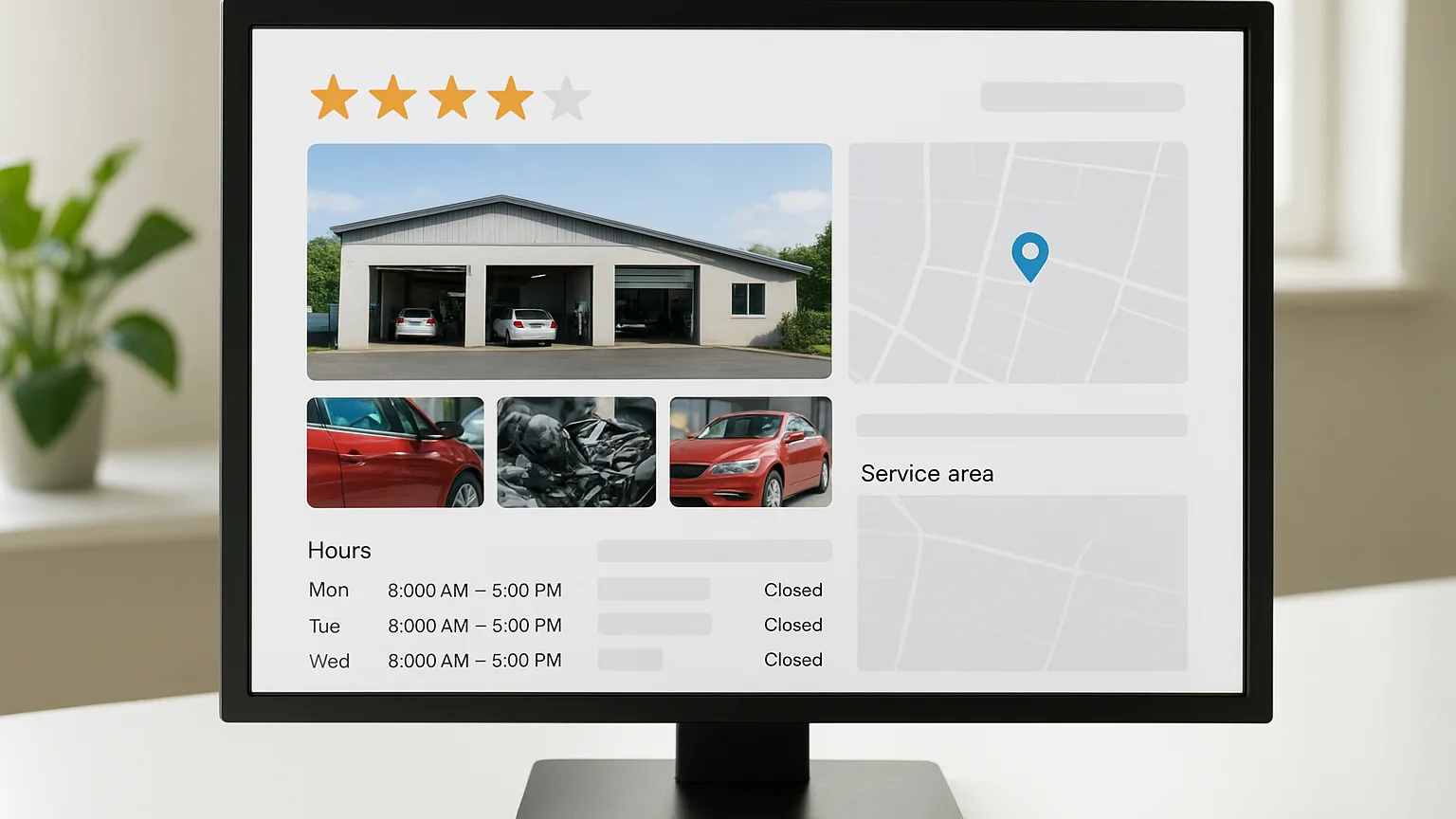
Mobile repair is the strongest advantage most glass shops own, and the most badly advertised. A driver with a spreading crack does not want to arrange a ride or lose an afternoon in a waiting room. If she cannot tell within seconds that you will come to her, she assumes you will not.
Fixing that is mostly plain-language work:
Publish the practical things nobody thinks to mention. Does the resin need direct sun. Can you work in light rain. How long before she can drive. Whether you handle the insurance paperwork, and whether a chip repair typically costs her nothing out of pocket. Each answered question removes a reason to call someone else, and these short, direct answers are what AI assistants and voice searches pull from when a driver asks a phone instead of typing.
All of it collapses if the call rings out. Emergency glass work is won on the first ring, and shops that route mobile calls to a tech's cell while he is under a windshield lose jobs they already paid to attract. A dedicated line, a real human, or at minimum a fast callback promise protects everything upstream of it, the same discipline that applies to the referral relationships described in the referral partners filling a competitor's winter schedule.
Winning nearby drivers is not a mystery and not a budget problem. It is the accumulation of small, unglamorous completions: hours that match reality, a service area that names real neighborhoods, photos of your own van, reviews that mention mobile chip repair by name, and answers to the questions a worried driver asks before she trusts a stranger with her windshield. Your competitor is not outworking you in the bay; they are outworking you in the ninety seconds before the phone rings.
Start with the cheapest gaps. Update the listing this week. Ask your next five mobile customers for a review while the van is still in the driveway, and ask them to mention where you came to and how fast. Reply to every review, including the unkind one. Do that for a season and the compounding works for you instead of against you, because the urgent calls go to whoever looks most present, and presence is something you can simply decide to build.