The local people who already have a driver's attention, and a repeatable way to become the one shop name they hand out.

Part two looked at how nearby drivers pick a shop the moment a rock hits the windshield, and how review signals and mobile-service details tip that decision. But a whole second stream of work never starts with a search. It starts with someone else telling the driver where to go.
This series was shaped in part by insights from Soderman SEO, whose work with glass shops shows a pattern worth sitting with: the shops with full winter calendars usually are not outspending anyone. They have three or four people in town who send them work without being asked twice.
Ask a shop owner where their referrals come from and you will usually hear "body shops," then a pause. That pause is the problem. Body shops are the obvious partner, which makes them the most crowded, most price-squeezed, and most likely already locked in with whoever showed up first in 2019.
The sources that actually move winter volume are the ones nobody courts. Think about who touches a vehicle in the two weeks before a small chip becomes a full replacement:
Most of these people are not withholding referrals out of loyalty to your competitor. They have one name in their phone, and it is not yours. That is fixable, and cheaper to fix than almost anything else in your marketing.
Cold weather does not create chips. It finishes them. A chip that sat quietly all summer spreads across the glass the first morning someone runs the defroster on high against a 20-degree windshield. Your winter volume is already sitting out there right now, in vehicles your future partners are looking at today. Call early and you are the name already written on the whiteboard when the phone starts ringing. Wait for the first freeze and you are competing for attention during the busiest month of your partners' year. The same logic applies to how you position value rather than price, which is where the pricing habit that turns a shop into a commodity does the heavy lifting for partner relationships too.
Partner outreach rarely fails on the pitch. It fails because the effort happens once, in a burst, then dies because nothing tracks it. A system beats enthusiasm every time.
Open a map, set a fifteen-minute driving radius, and list every business type from the categories above. Cap the list at twenty: small enough to visit in person over two weeks, large enough to produce real volume. Write down the decision maker's name, not just the business name. "The service writer at the Toyota place" is not a contact.
A mechanic does not care about your adhesive or your ADAS calibration bay until it solves something annoying for them: a customer question they cannot answer, or a car tying up a bay while glass gets sorted out. So the offer becomes:
That last one matters more than shop owners expect. Partners refer when they feel safe repeating the information. Vague pricing kills referrals because nobody wants to be wrong in front of their own customer.
Cards get lost. A single laminated sheet with your logo, cell number, chip repair pricing, and a line about mobile coverage survives on a counter for years. Add a stack of chip-repair cards the partner can hand out, with a code that tells you where the job came from. Now referrals become measurable instead of anecdotal, and the same tracking discipline that Soderman SEO applies to search visibility starts working on your offline channels. Then set a recurring reminder: a visit or call every six weeks for active partners, every twelve for cold ones. When a referral comes in, text a thank you the same day and tell them the outcome. "Fixed the Silverado, out in 40 minutes, customer was happy." That one message does more for retention than any gift basket.
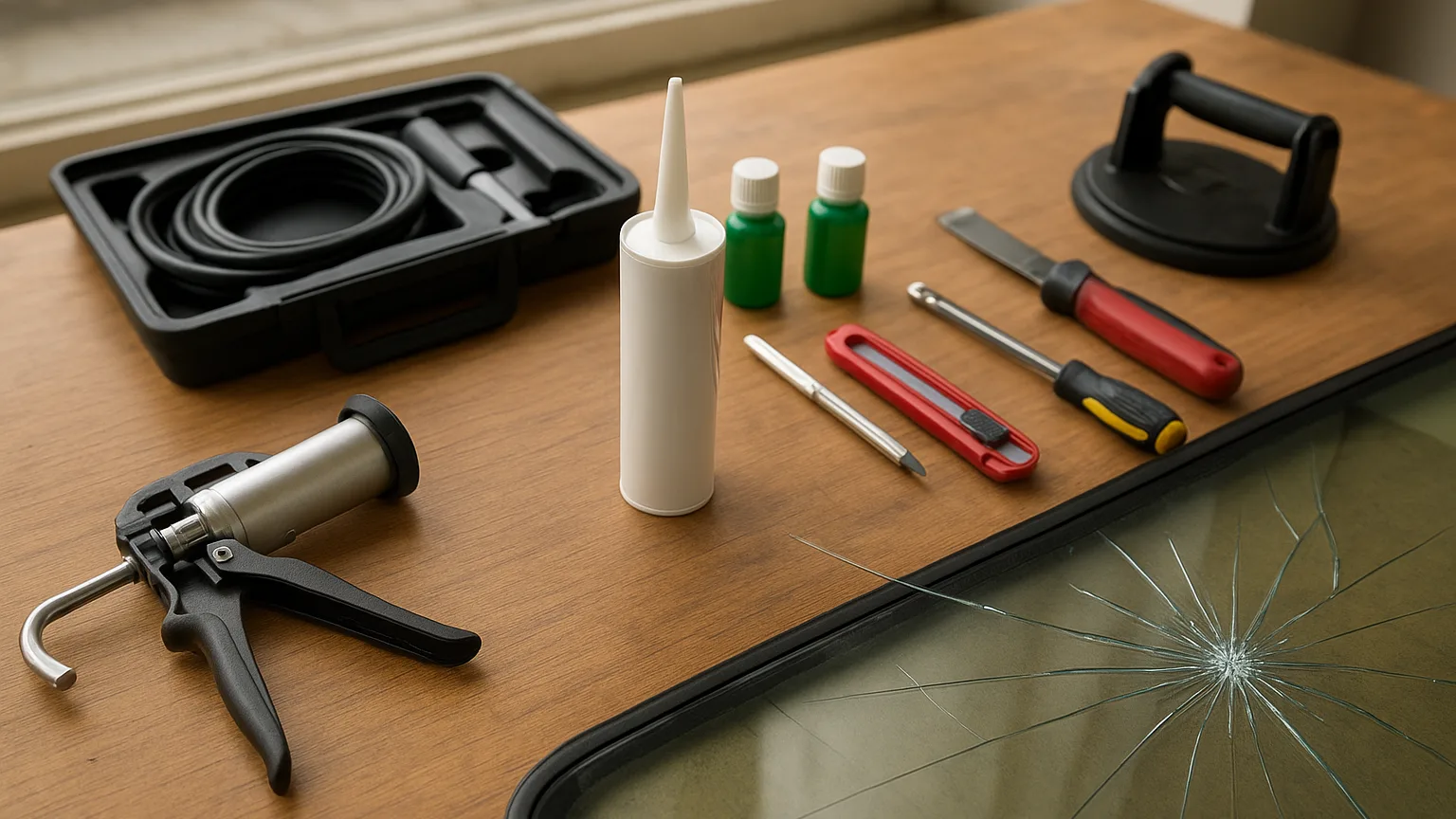
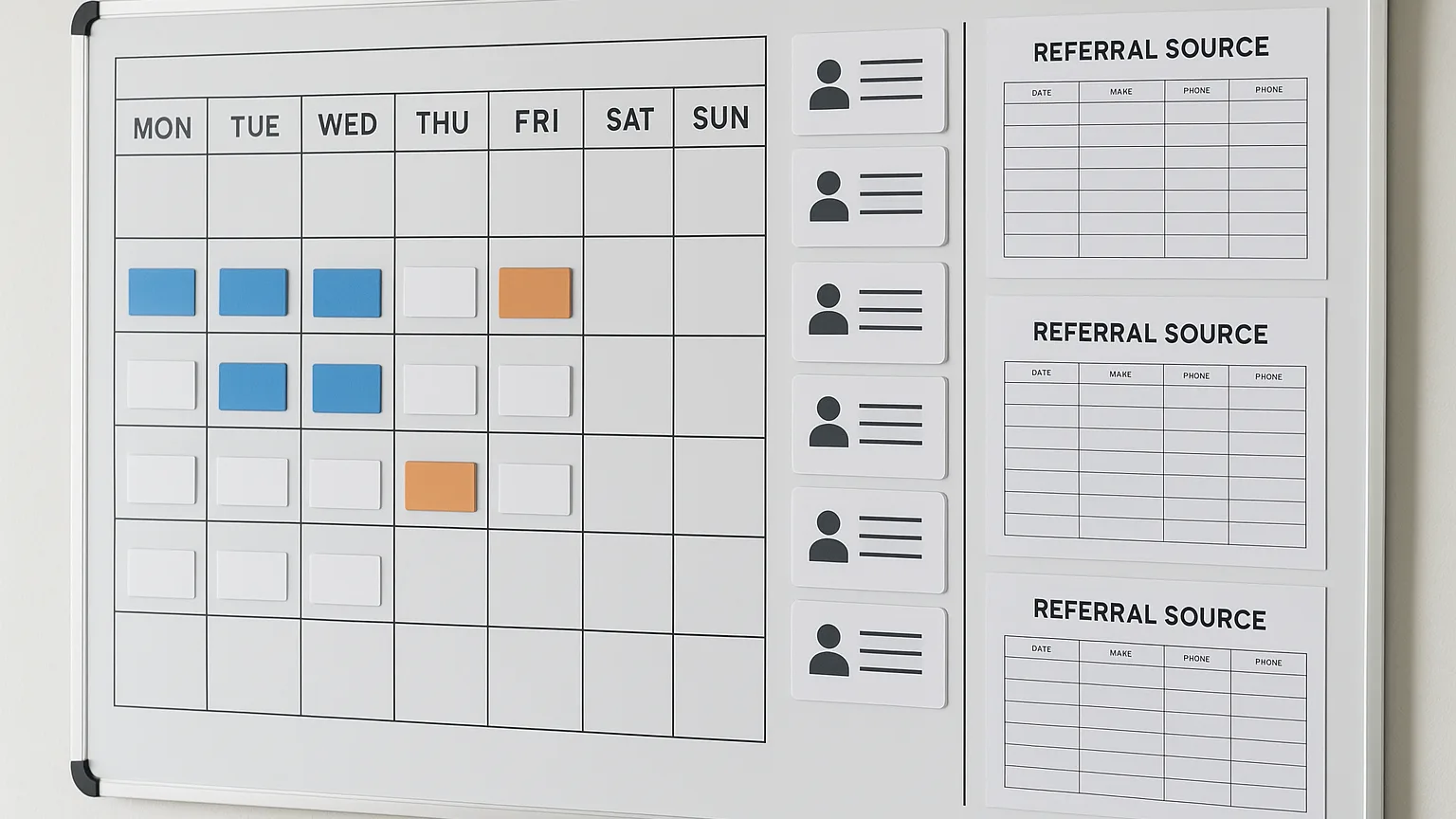
The first referral is a test. Partners are watching whether you show up when you said, whether their customer came back happy, and whether you made them look good. Nail those three and you are no longer a vendor, you are their glass department.
The shops that convert one-off referrals into standing accounts do a few unglamorous things consistently. They send a short recap after every partner job. They keep a spare set of common windshields for the vehicles that partner works on most. They never sell around the partner by pitching other services to the customer. And they answer the phone during the exact hours that partner is open, which is often earlier than their own posted hours.
Nobody likes this part, but it works. After a clean job, ask one specific question: "Who else in your building sees windshields I should be talking to?" Fleet managers know other fleet managers. Property managers sit on committees. One well-served partner is usually a door into three more.
When a partner says your name, the driver often searches it before calling. If your listing is thin or your reviews are stale, that referral leaks straight back into the open market, which is exactly why the search side covered in why nearby drivers call the other glass shop first and partner outreach have to work as one motion rather than two separate projects.
Across this series the thread has been the same: invisibility is rarely a budget problem, it is a positioning problem. Part one showed how quoting the lowest number turns a skilled shop into a line item, and how trust, turnaround, and insurance ease rebuild real margin. Part two showed how the emergency chip call gets decided in a few seconds of local search and reviews. This part closes the loop with the quiet channel that keeps a schedule full when the temperature drops: the handful of local people who already have the driver's attention and simply need one name to give.
Pick your twenty names this month. Walk in with a laminated sheet, a real cell number, and a promise you can keep. Follow up on a calendar, thank every referral by name, and ask who else you should meet. By the time the first hard freeze cracks half the chipped windshields in town, the calls will be coming to you, and the shop across town will still be wondering how a quiet competitor filled January without spending a dollar more than they did.